Storm Door Picks for Bloomington MN Winter Entryways
Bloomington winters are not gentle on entry doors. Between the sustained wind chills that push temperatures well below zero, the freeze-thaw cycles that stress frames and seals, and the ice that accumulates at thresholds, your front door takes serious punishment from November through March. A storm door adds a critical layer of insulation and protection — but only if you choose the right one for this climate. Not every storm door sold at a big-box store is built for what Minnesota dishes out.
Why Storm Doors Matter More in Bloomington Than in Milder Climates
In temperate regions, a storm door is mostly a convenience — a way to let a breeze in during spring without inviting insects. In Bloomington, it serves a structural and thermal function. When outdoor temperatures drop to minus fifteen with a wind chill pushing minus thirty, the air cavity between your storm door and your entry door becomes a meaningful buffer. It slows heat transfer, reduces condensation on the interior door surface, and keeps cold air from hammering directly against weatherstripping that was never designed for Arctic-level exposure.
Beyond thermal performance, a storm door protects your entry door's finish. Wood doors crack and split when they absorb repeated cycles of moisture and freezing. Fiberglass doors can hold up better, but even they benefit from the shelter a storm door provides. If your entry door faces north or northwest — which many Bloomington homes do given the grid layout of older neighborhoods near the Normandale Lake area — this protection matters even more.
Full-View Glass Panels and Why They Work Here
Full-view storm doors, which replace the entire panel area with glass rather than using a combination screen-and-glass insert, are a strong choice for Minnesota winters. The reason is simple: more glass means less cold air infiltration through panel seams. A full-view design with a single continuous glass panel has fewer gaps than a storm door with upper and lower inserts that must seal against a center rail.
Look for full-view doors with low-E glass coatings. Low-E stands for low emissivity, meaning the glass has a microscopic metallic coating that reflects heat back into the home rather than allowing it to radiate outward. In a climate like Bloomington's, low-E coatings on storm door glass can noticeably reduce heat loss through the entryway even when outdoor temperatures are extreme. They also reduce the UV fading that affects entry door finishes and any furniture or flooring visible through the glass.
Frame Material Comparisons for Cold-Climate Doors
Storm door frames come in three primary materials: aluminum, steel, and wood-composite. Each has trade-offs that matter in a Minnesota context.
- Aluminum frames are the most common and generally the most affordable. They resist rust and hold up well to moisture, but aluminum conducts heat and cold readily. In extreme cold, an aluminum frame can develop condensation on the interior surface and may feel noticeably cold to the touch near the door handle. Look for aluminum frames with thermal breaks — an insulating barrier inside the frame profile that interrupts the metal-to-metal heat conduction path.
- Steel frames offer greater structural rigidity and tend to hold their shape better through repeated freeze-thaw cycles. They also provide a heavier feel that many homeowners associate with quality. Like aluminum, steel conducts temperature, so thermal breaks matter here as well. Steel frames are less prone to warping at the corners, which is where many aluminum storm doors eventually fail after several hard winters.
- Wood-composite frames are less common in storm doors but do appear on higher-end products. They have natural insulating properties that outperform both metals, but they require more maintenance and can be vulnerable to moisture infiltration if the finish is not maintained over time.
For most Bloomington homeowners, a steel-framed storm door with a thermal break and low-E full-view glass represents the best balance of durability, thermal performance, and cost over a ten-year horizon.
Threshold and Weatherstripping Details That Get Overlooked
The bottom of your storm door is where cold air most commonly infiltrates. A quality storm door should include an adjustable expander at the bottom rail — a strip that can be lowered or raised to seal against the threshold as the door settles over time. In Bloomington, where frost heave can shift concrete stoops and entry pads by a quarter inch or more over a single winter, this adjustability is not optional. It is what keeps the seal working after the ground moves.
Weatherstripping on storm doors compresses and degrades faster in extreme cold because rubber and foam become less pliable at low temperatures. Look for doors that use replaceable pile weatherstripping or high-density foam that is rated for temperature ranges that include minus twenty Fahrenheit. Some manufacturers rate their weatherstripping only down to zero, which is not sufficient for the conditions near Minnesota Valley or the exposed corridors around 494.
Hardware and Closer Mechanisms in Cold Weather
Storm door closers — the pneumatic or hydraulic cylinder that controls how quickly the door swings shut — are notorious for failing in cold weather. Hydraulic fluid thickens significantly when temperatures drop, causing closers to slam doors or fail to close them at all. When shopping for storm doors for a Bloomington entryway, ask specifically about the operating temperature range of the closer mechanism. Higher-quality closers use fluid formulations designed to remain consistent down to minus twenty or below.
Door handles and deadbolts on storm doors should be keyed-entry if you rely on the storm door for security when you're away, or passage-function only if you prefer not to carry two keys. In either case, choose hardware with a finish rated for exterior exposure — satin nickel and oil-rubbed bronze both hold up well in the alternating wet and dry conditions that define Bloomington winters.
Installation Fit and the Local Importance of Getting It Right
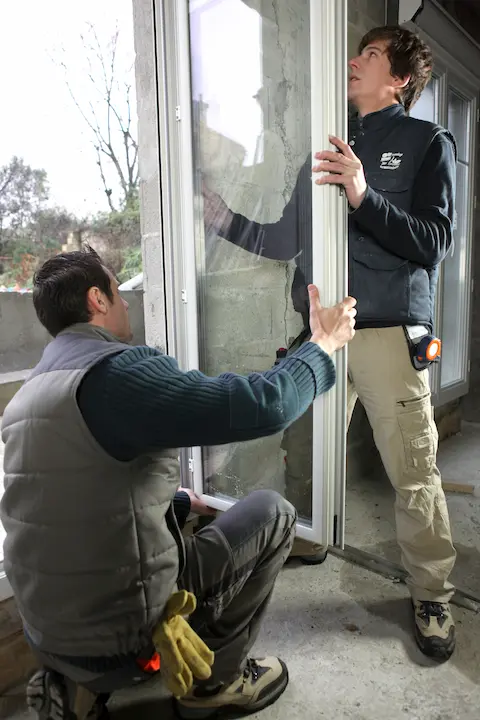
A storm door that fits poorly is worse than no storm door at all, because gaps around the frame create channels for wind-driven moisture to accumulate against your entry door. Professional installation ensures the door is plumb, the frame is shimmed correctly against any irregularities in the brick mold or siding, and the sweep seals flush against the threshold under actual operating conditions.
If you are replacing an existing storm door, measure the rough opening before ordering. Entry doors in older Bloomington neighborhoods — particularly the post-war homes in areas like Oxboro and Penn-American — often have non-standard rough openings that require custom-sized storm doors rather than stock sizes. Getting a measurement wrong by half an inch means the frame will not seat correctly and the weatherstripping will never seal properly.
For a complete look at Window & Door Installation options available locally, including how storm doors integrate with full entry door replacement projects, the information can help you plan the right sequence of work. And if you want to understand what windows actually cost here before budgeting a larger exterior project, that context is worth reviewing alongside your storm door decisions.
A well-chosen storm door does not need to be the most expensive product on the shelf. It needs to be the right product for the exposure, the orientation, and the existing entry door condition at your specific home. In Bloomington winters, that distinction matters every single day from November through April.
